
A storage device can have impressive peak throughput and still become a bottleneck

That is the challenge in AI infrastructure, especially when workloads become more dynamic, concurrent and unpredictable. Agentic AI does not behave like a simple sequential storage workload. Multiple agents may read context, update KV-cache, retrieve embeddings, generate new data and access previous states at the same time. That creates changing I/O patterns and resource contention….
High-Power Analog amplifiers in robotic applications
Precision control is only useful when the power stage can deliver the required current, voltage and dynamic response. In robotic systems, the analog power path determines whether an actuator moves accurately, remains stable under changing loads and survives demanding operating conditions. Microcontrollers and FPGAs handle logic, computation and control. But motors, actuators and multi-rail power systems require much higher…
Trapezoidal or FOC? Sensored or sensorless? Or a combination of both?

Today we had a very useful technical session with Stefan Agasvari from Fortior Tech about BLDC motor control and the design choices behind it. One thing became clear quickly: there is no single “best” control architecture. It depends on the motor, the application and the required balance between efficiency, acoustics, torque behaviour, cost and complexity….
MegiQ launches full 3D antenna measurement system
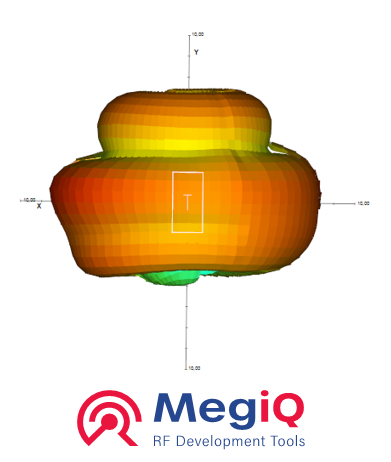
MegiQ is expanding its successful Radiation Measurement System (RMS) with a new 2-axis rotation system for measuring full 3D spherical antenna radiation patterns. Read more
Adding vision to an AI wearable sounds simple…

Until the design has to stay compact, cool, responsive and power efficient. Read more [Picture source: TOP-electronics on linkedin.com]
Clocking is a system block, not just a pin

Even when the converters and analog stages are carefully selected, clock quality can become the performance-limiting factor in a professional audio design. Jitter is a timing error in the clock signal. During ADC sampling, this timing error can couple into the audio signal, modulate its phase and introduce distortions. Looking only at headline specifications such…
Most wireless problems aren’t caused by the modem. They’re caused by what happens around it.

Antenna placement. PCB layout. Housing materials. Ground planes. Small design choices can have a huge impact on wireless performance, often long before a product reaches the market. Read more [Picture source: Cores Snoey on linkedin.com]
Mic-pre gain control should feel continuous and sound clean

In professional audio designs, digitally controlled microphone preamp gain can be a challenging integration point. Many systems combine stepped analog gain with a matching digital adjustment to create the experience of smooth, continuous control. The timing of those gain changes matters. When the analog and digital steps are not precisely coordinated, audible transients can occur….
The audience hears the system, not your design constraints

Installed audio and musical instruments share the same engineering reality: the audience hears the system, not your design constraints. Across platforms, the recurring challenges are often similar: Read more [Picture source: TOP-electronics on linkedin.com]
Driving motion: High-Power Analog amplifiers in robotic applications
Precision control is only useful when the power stage can deliver the required current, voltage and dynamic response. In robotic systems, the analog power path determines whether an actuator moves accurately, remains stable under changing loads and survives demanding operating conditions. Read more